Designed the self-serve ordering portal for a B2B wholesale distributor whose growing partner network was entirely dependent on phone calls to one sales manager. The core challenge was that buyers in this industry trusted personal relationships more than digital interfaces. I ran 12 on-site field visits to understand how partners actually made purchasing decisions, and used those findings to design a platform that moved the business from sales-assisted ordering to self-serve. 100+ businesses onboarded within 6 months of launch.
" height="1px" id="eqmcWiMUn" stroke-dasharray="0" stroke-linecap="round" stroke-linejoin="round" stroke-width="1" stroke="rgb(170, 170, 170)" width="958px"/></svg>)
Product Designer
4 people
4 month
United Tires
Field Research · Information Architecture · UI Design & Prototyping · Usability Validation
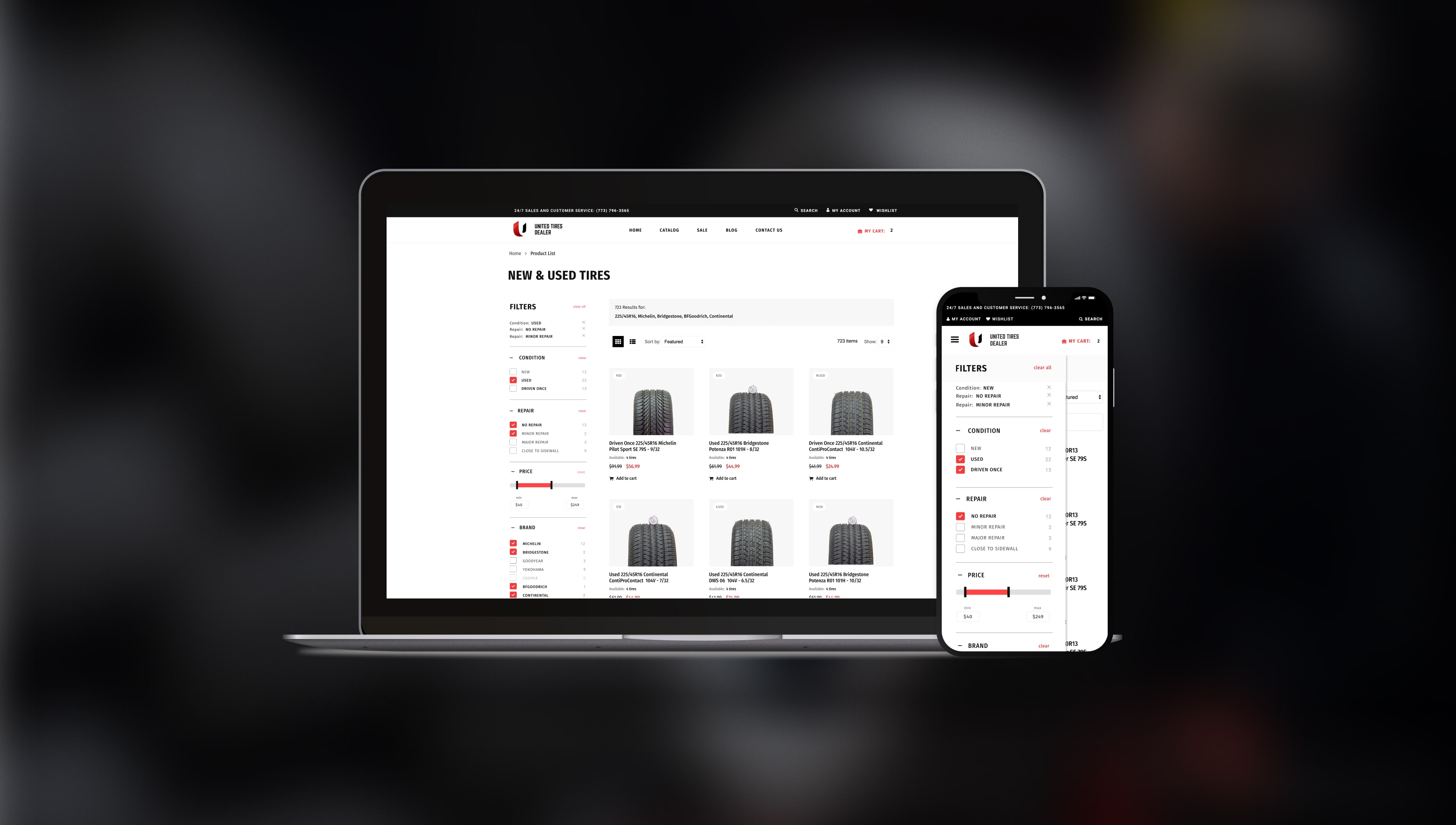
The problem
A growing B2B channel with no way to scale
United Tires was building out a wholesale channel, partnering with local tire shops and used car dealerships across the region. The business had a strong value proposition: local inventory, fast delivery, better pricing than national distributors. The partner network was already growing.
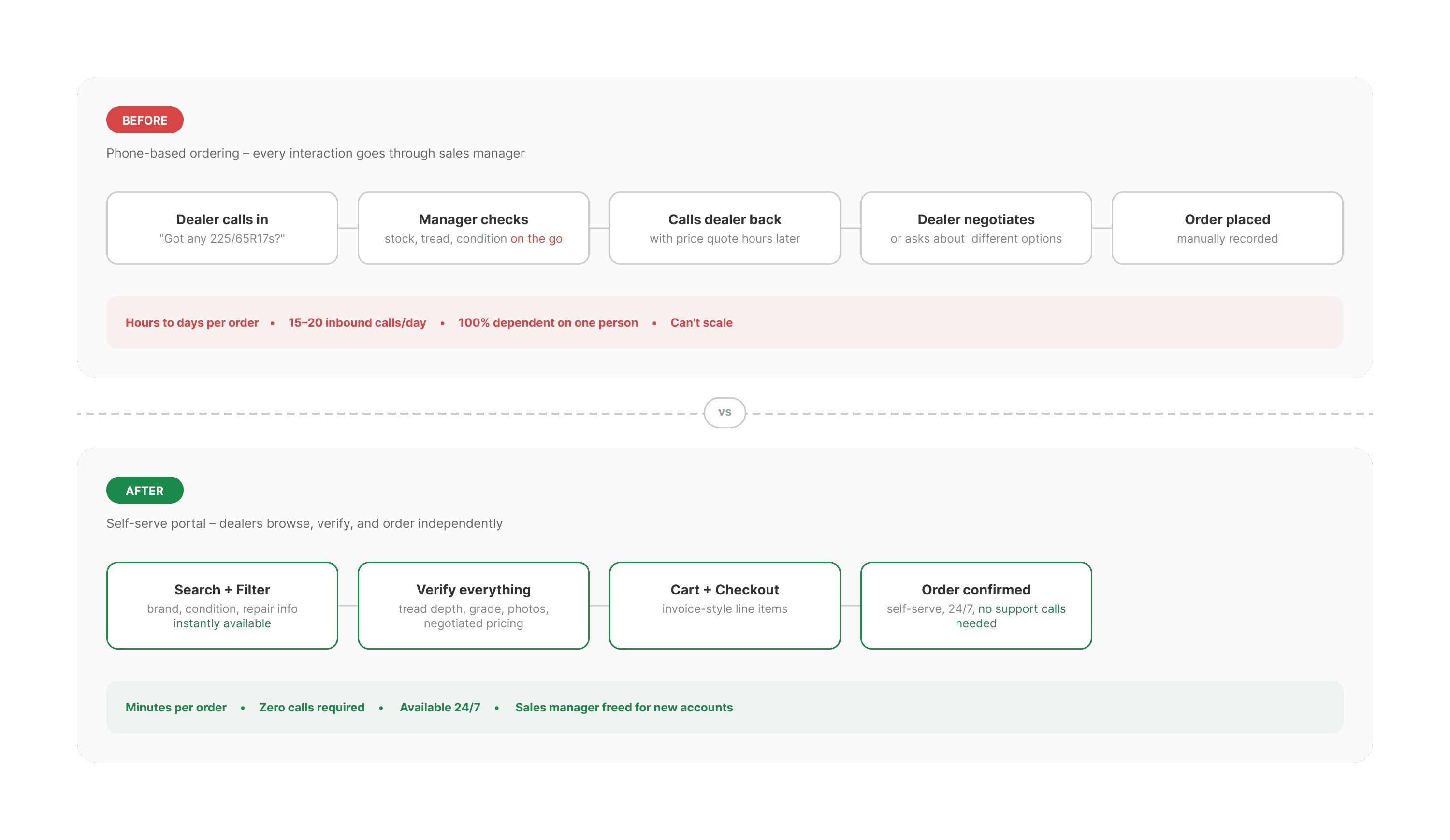
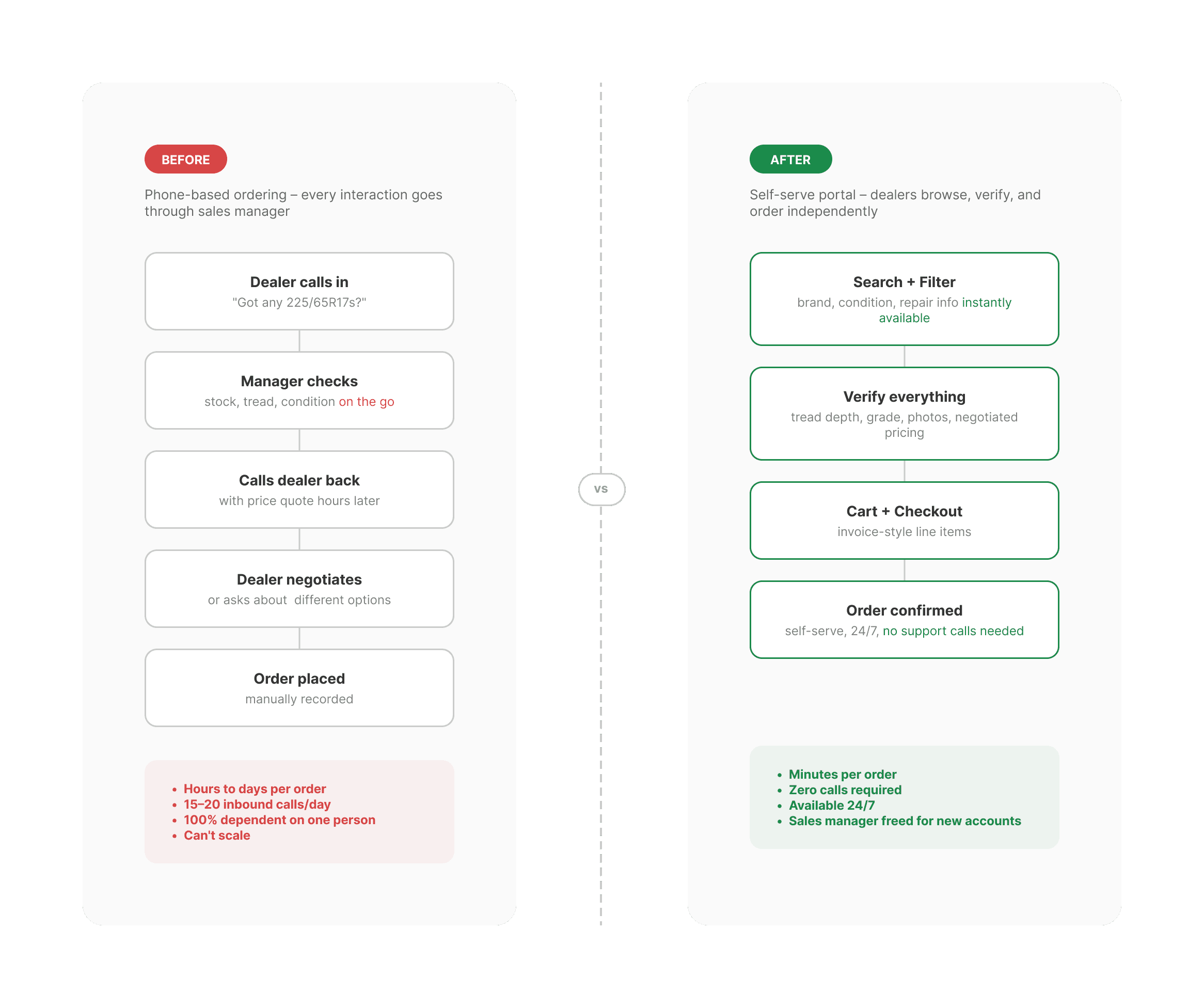
But every wholesale interaction still ran through one person. The sales manager was handling 15–20 calls a day from partners asking about stock, condition, pricing, and availability. That number doesn't sound dramatic on its own, but he was also the person driving between locations, processing existing orders, and trying to sign new accounts. Every call he spent answering a routine inventory question was time he wasn't spending on business development. The operational work was crowding out the growth work.
When a partner had their own customer in front of them asking about a product, they needed to check our inventory and pricing right then. If the sales manager was driving or on another call, the partner was stuck waiting for a callback while their customer was deciding whether to stay or walk. Our bottleneck wasn't just slowing down our operations, it was costing our partners their own sales.
And the wholesale side of the business was about to scale significantly. There was no system in place to absorb any of that volume. The company needed to move from a fully sales-assisted model to one where partners could self-serve for routine transactions.
Field Research
What 12 on-site visits to dealerships and tire shops revealed
I traveled with our sales manager to 12 locations across the region, a mix of small tire shops and used car dealerships. Instead of remote interviews, I went on-site and watched how they actually worked. I sat in back offices while they placed orders with other suppliers, looked at their handwritten supplier lists, and asked owners what mattered to them when choosing who to buy from.
What I found
1. We weren't replacing a broken system. Most shops already had 2–3 wholesale contacts they'd worked with for years. They weren't looking for a new supplier. We had to give them a reason to add one more.
2. Phone calls were about trust, not just information. Dealers didn't call suppliers only to check stock. They called to talk, get recommendations, feel out whether this was someone they could rely on. The phone call itself was how trust got built. Moving to self-serve meant losing the interaction that made them comfortable ordering in the first place.
3. Previous bad online experiences had made them skeptical. Multiple owners told me they'd tried ordering tires online from smaller companies before. Listings were inaccurate, tires showed up in worse condition than described, and there was nobody to call when it went wrong. So they stopped. They went back to phone calls with people they knew.
‟
"I've been burned before. Bought a set online, showed up and they were basically bald. Now I call every time. If I can't talk to someone, I don't order."
— Tire shop owner, on-site interview
The insight
The interface had to earn the same trust that personal relationships provided. In B2B, that trust comes from transparency: showing buyers exactly what they're getting, with nothing hidden behind clicks or vague descriptions.
Core Design Principle
Designing for Trust
Does this prevent a phone call?
The research kept pointing to four things dealers always verified by phone before placing an order: condition, exact tread depth, repair history, and price. If any of those were missing or vague on the screen, they'd pick up the phone. And if they had to call anyway, the portal wasn't doing its job.
1
Data-dense cards over clean e-commerce
The typical e-commerce approach is to keep product cards clean and minimal, then let people click through for details. That works when shoppers are browsing casually. These dealers weren't browsing casually. They'd been burned by inaccurate listings before, and anything they couldn't see upfront felt like something being hidden from them.
The first problem was search. When a dealer calls their supplier, they don't browse. They ask a compound question: "Do you have any 225/65R17s, new or patched, at least 8/32 tread?" That's four filters at once: size, condition, repair level, and minimum tread depth. I designed a multi-select filter system that could answer that exact question in seconds, with the active filters and result counts visible at all times so dealers always knew exactly what they were looking at.
Then I tackled how the results were displayed. Each product card showed condition, tread depth measured in 32nds (not a vague "good" or "fair"), repair level, and the dealer's wholesale price, all without expanding or clicking into anything. Dealers needed pricing visible upfront so they could do quick margin math in their heads while browsing.
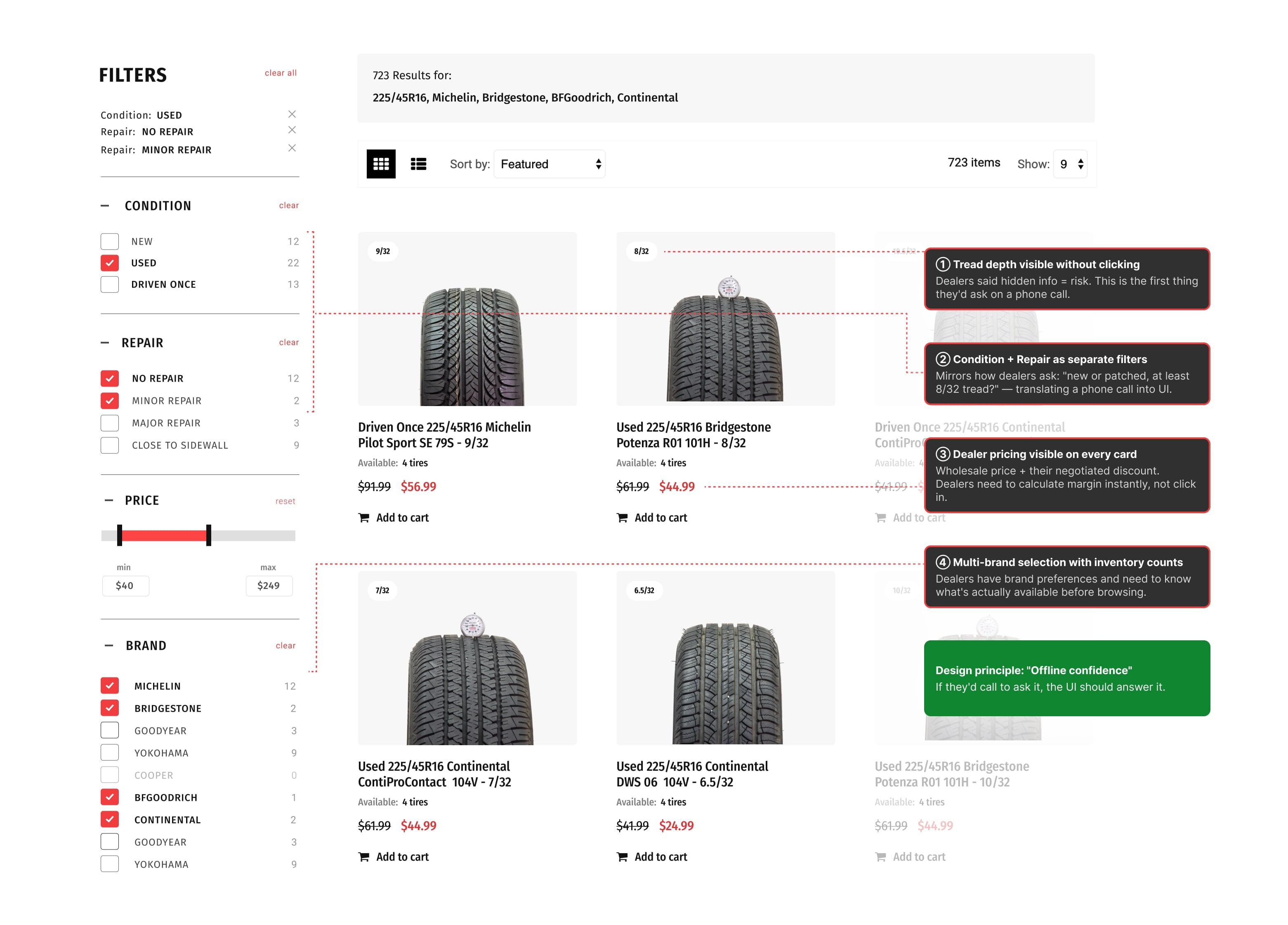
Each element maps back to something dealers would ask about on a phone call.
2
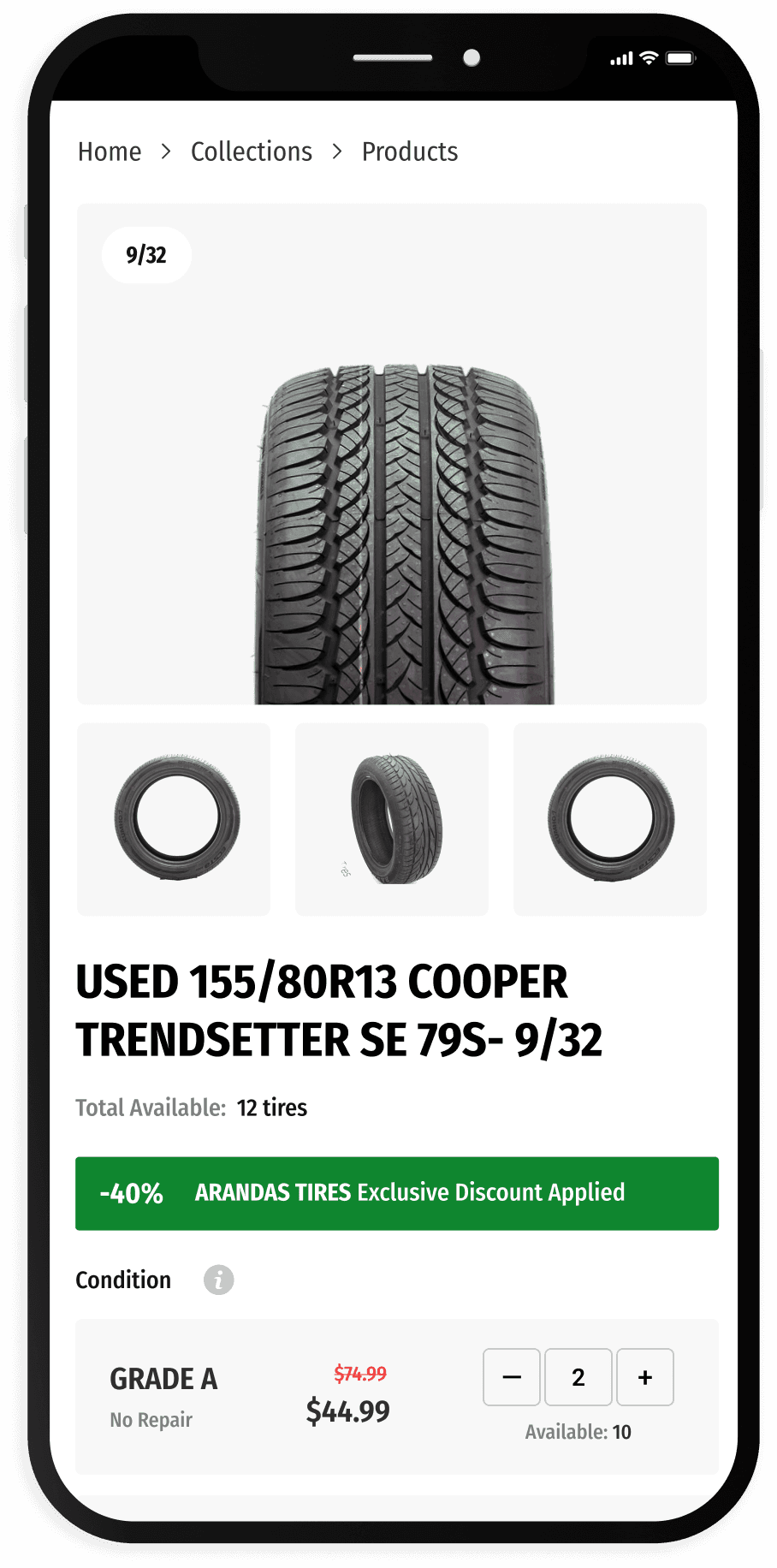
The product page as phone call replacement
I wanted a dealer to land on a product page and have zero reasons to pick up the phone. That meant showing tread depth in 32nds right on the image, and listing each condition grade with its own price so dealers could compare without clicking back and forth. Their negotiated discount was applied automatically, so they'd see their actual cost instead of having to call and ask "what's my price?" I included multiple photos from different angles because dealers had been burned by inaccurate listings before, and a market value check so they could confirm the deal made sense without leaving the page.
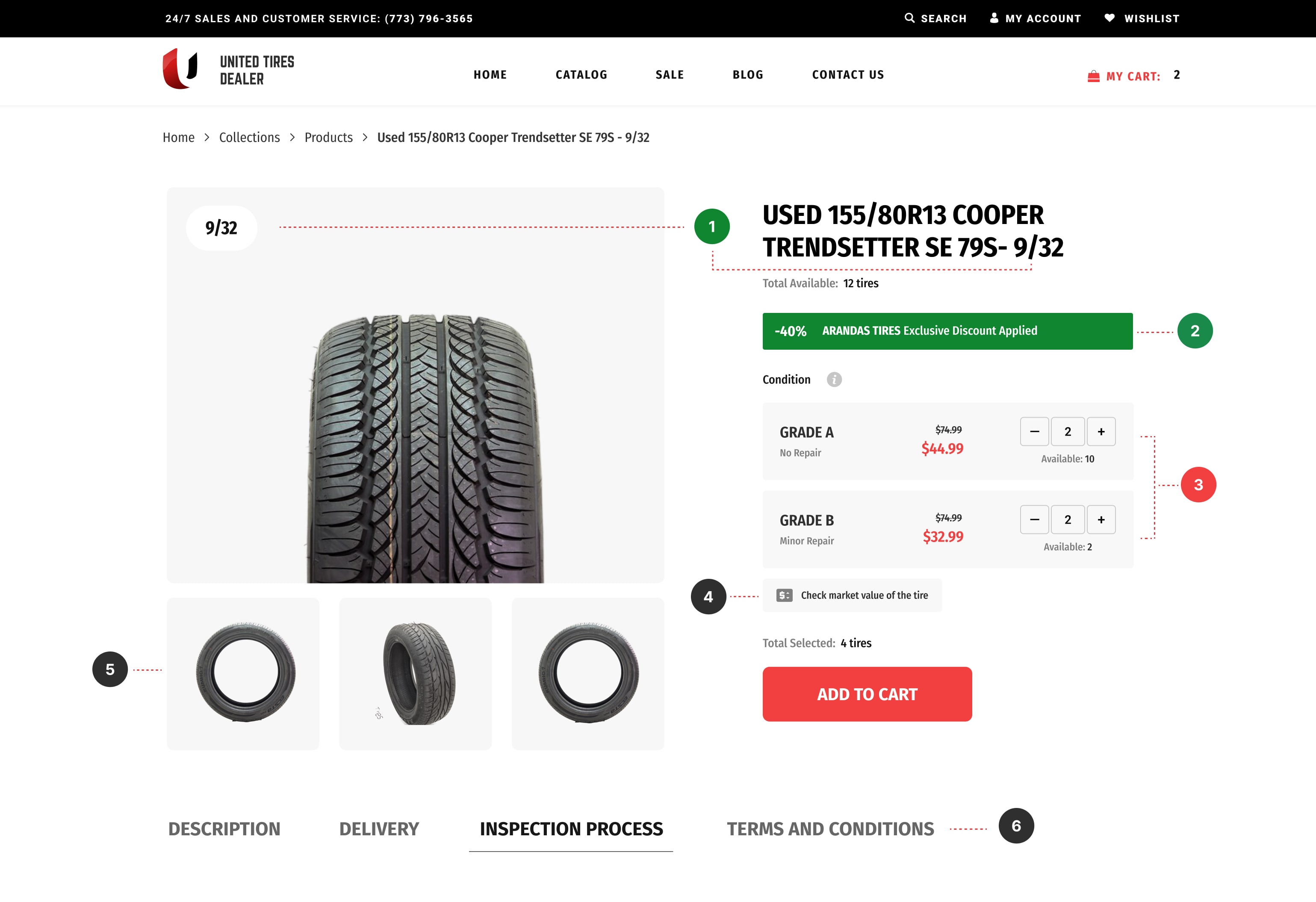
Everything a dealer would ask in a 5-minute phone call, visible on one screen.
Tread depth badge: Measured in 32nds, not vague "good/fair." First thing dealers verify on a call.
Dealer-specific discount: Their negotiated rate applied automatically. No need to call and ask "what's my price?"
Grade-level pricing: Same tire, different conditions, different prices. Dealers calculate margin on the spot.
Market value check: Lets dealers verify they're getting a good deal without leaving the page.
Multi-angle photos: Dealers were burned by inaccurate listings. Multiple views build trust.
Inspection + Terms tabs: Transparency about process reduces "what if it's not as described?" anxiety.
3
Keeping product details visible through checkout
Most e-commerce carts strip product details down to a name, a thumbnail, and a price. That works for consumer retail where the buyer already knows what they're getting. But a dealer ordering 30 tires needs to verify condition and specs on every line item before committing. If they can't confirm what they're ordering at the moment they're placing the order, they'll second-guess it, and that hesitation either turns into a phone call or a lost sale. So I kept tread depth, repair status, and live stock counts visible in every cart line item, and added the delivery threshold nudge to encourage larger orders.
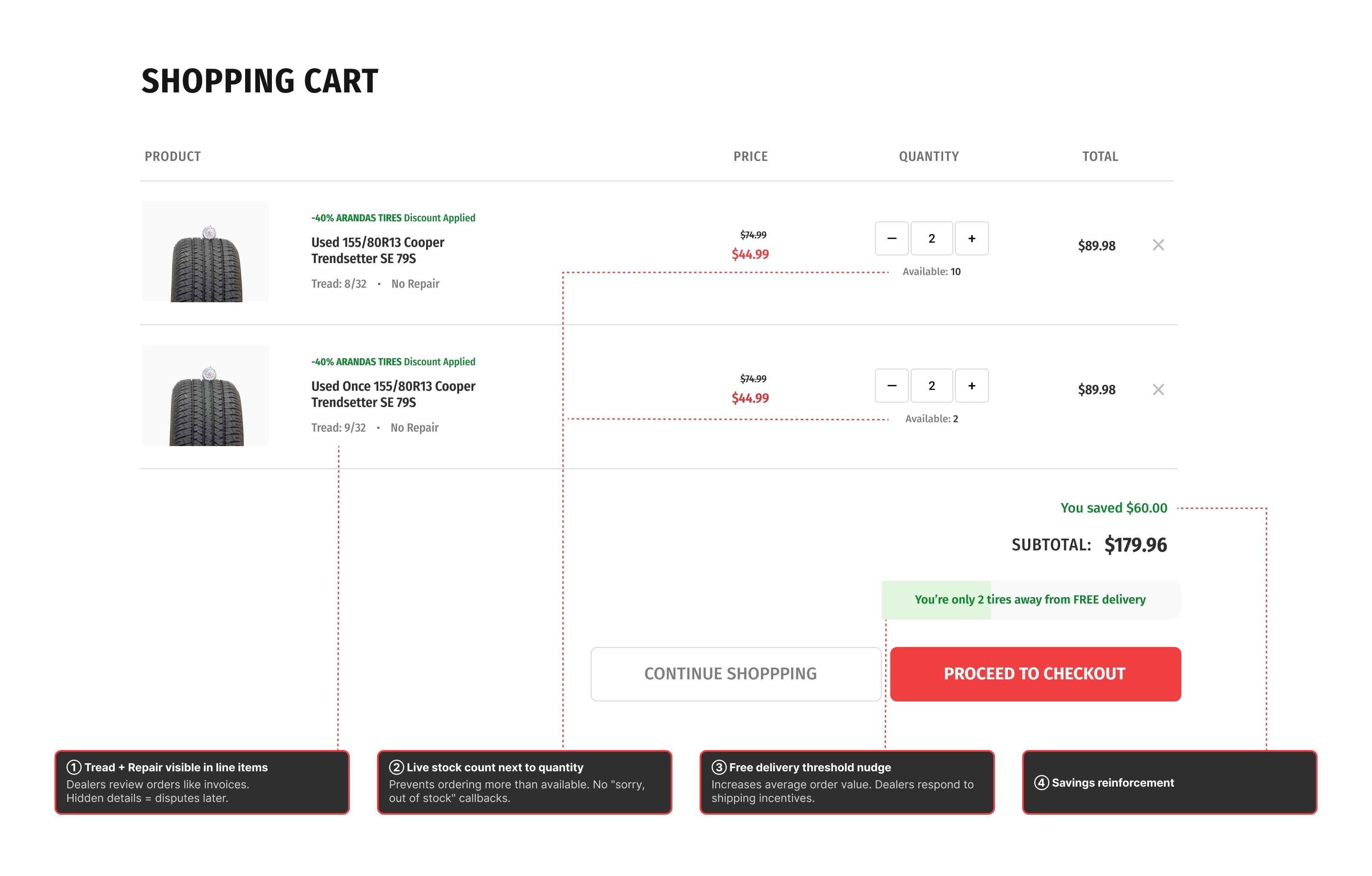
Condition and tread data stays visible in every line item. The delivery threshold encourages larger orders.
Mobile: same information, smaller screen
A lot of dealers checked inventory on the go, between appointments or from their shop floor. I made sure the mobile version had the same filter options and the same level of product detail as desktop. Stripping it down to a simplified "mobile-friendly" version would have meant they couldn't trust it for real purchasing decisions, and they'd go back to calling.
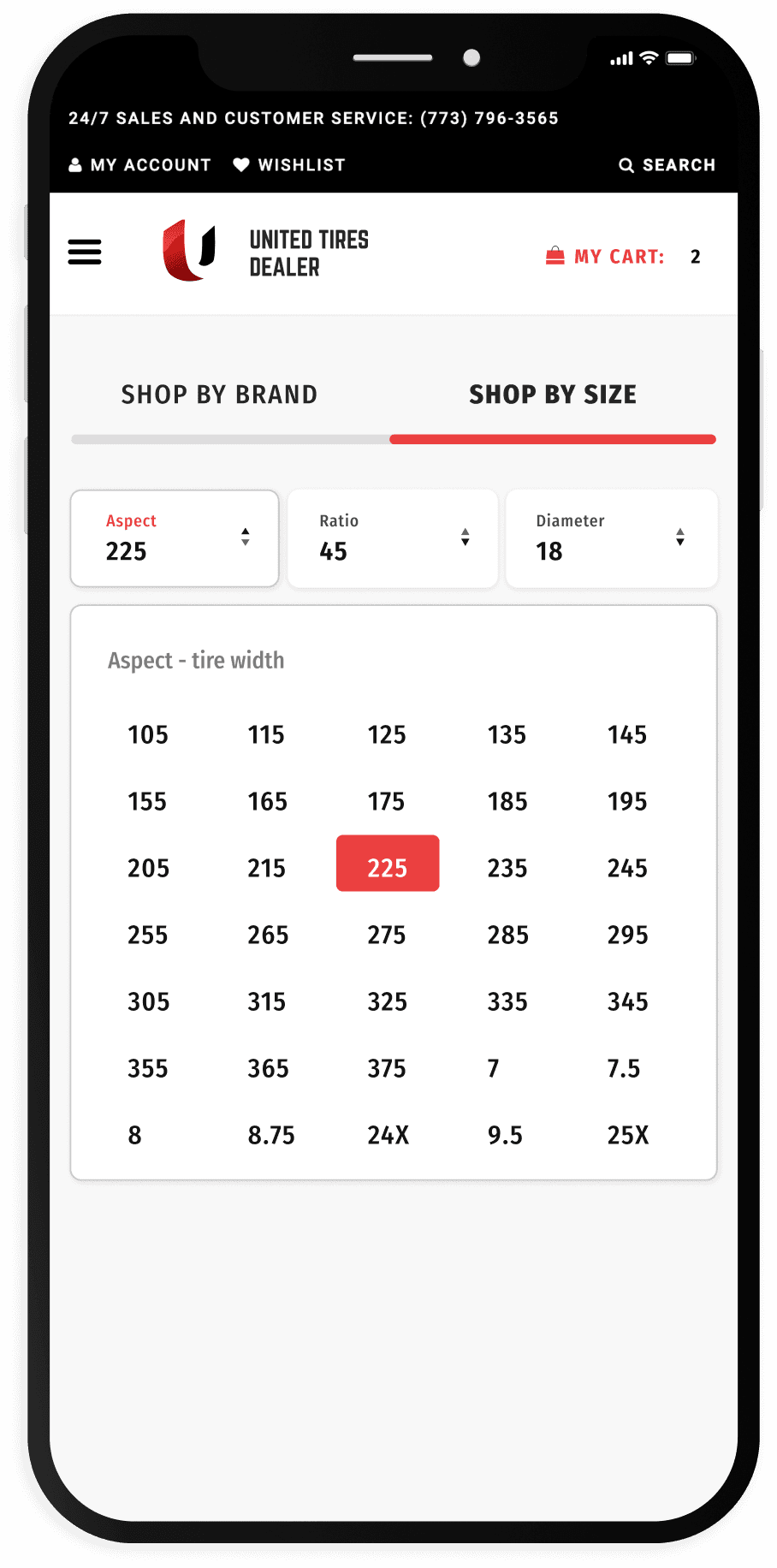
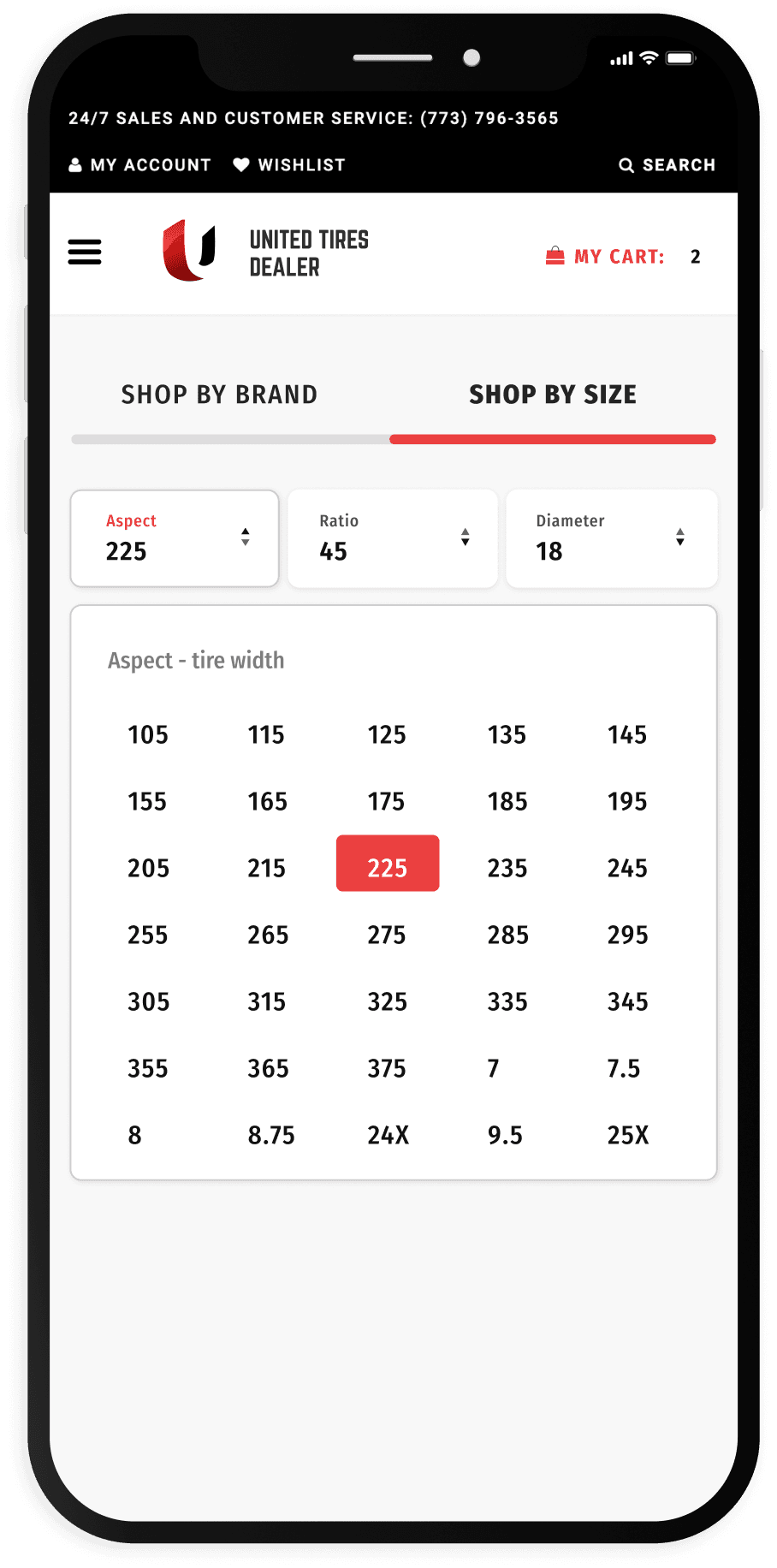
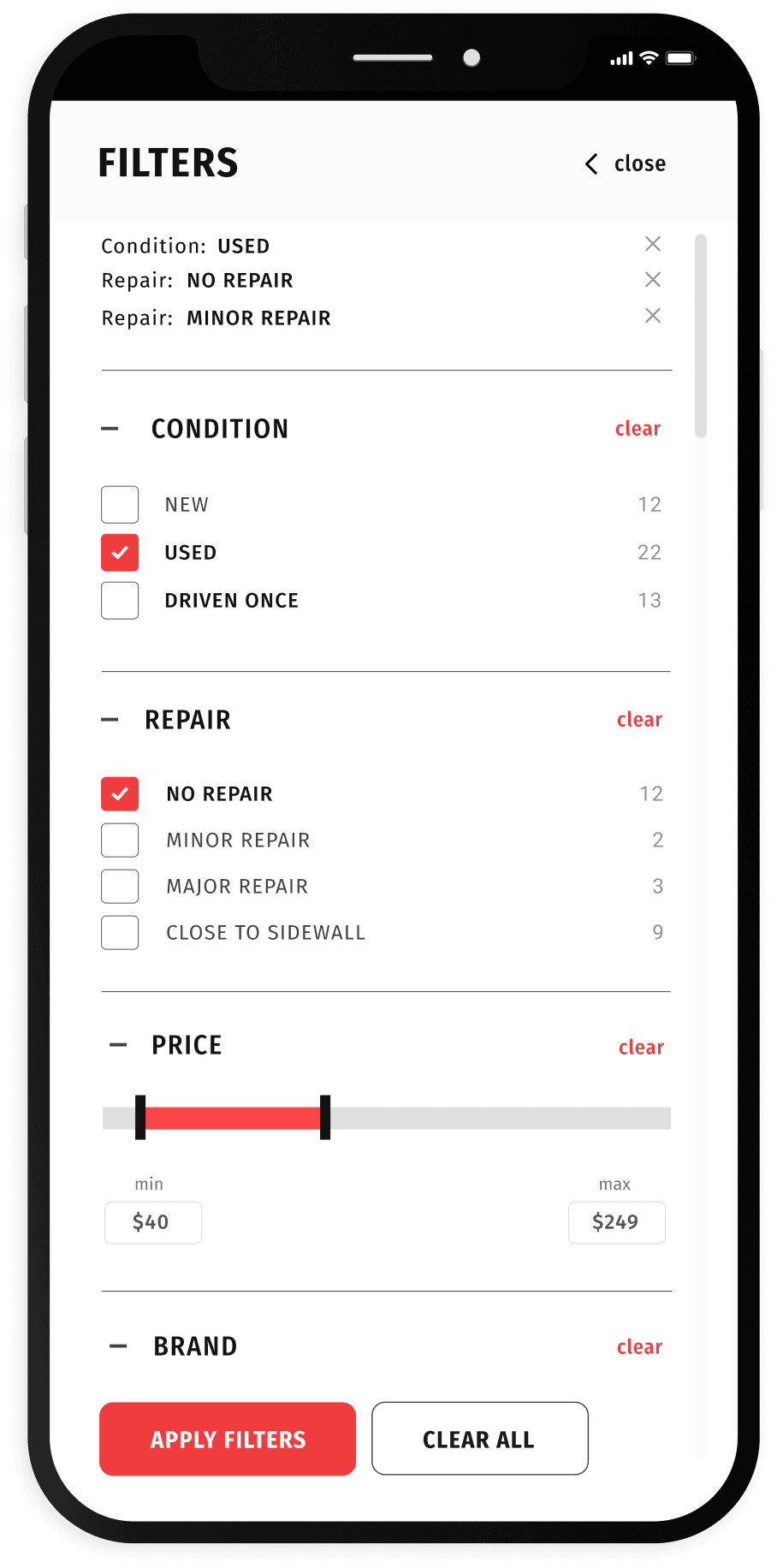
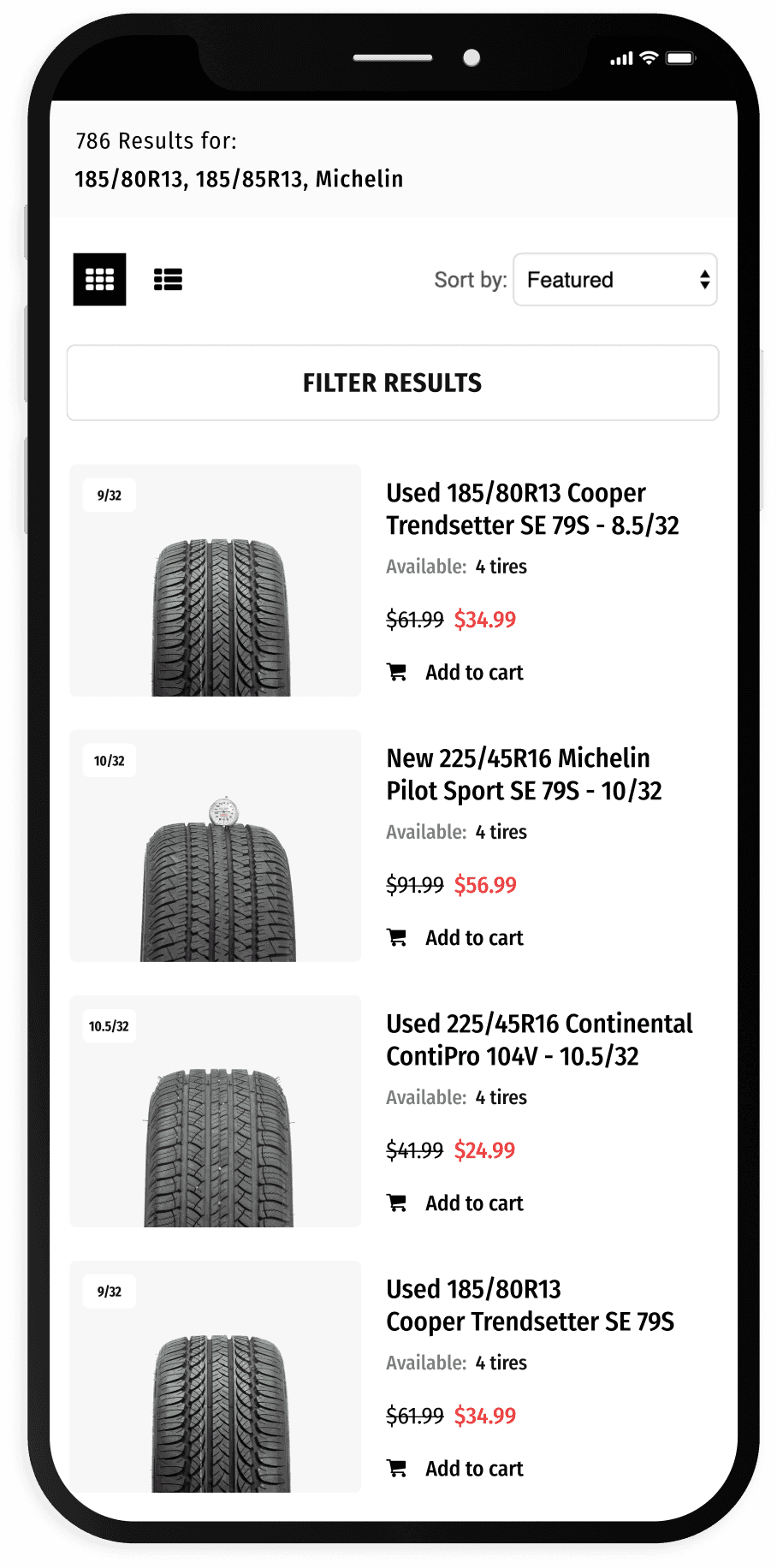
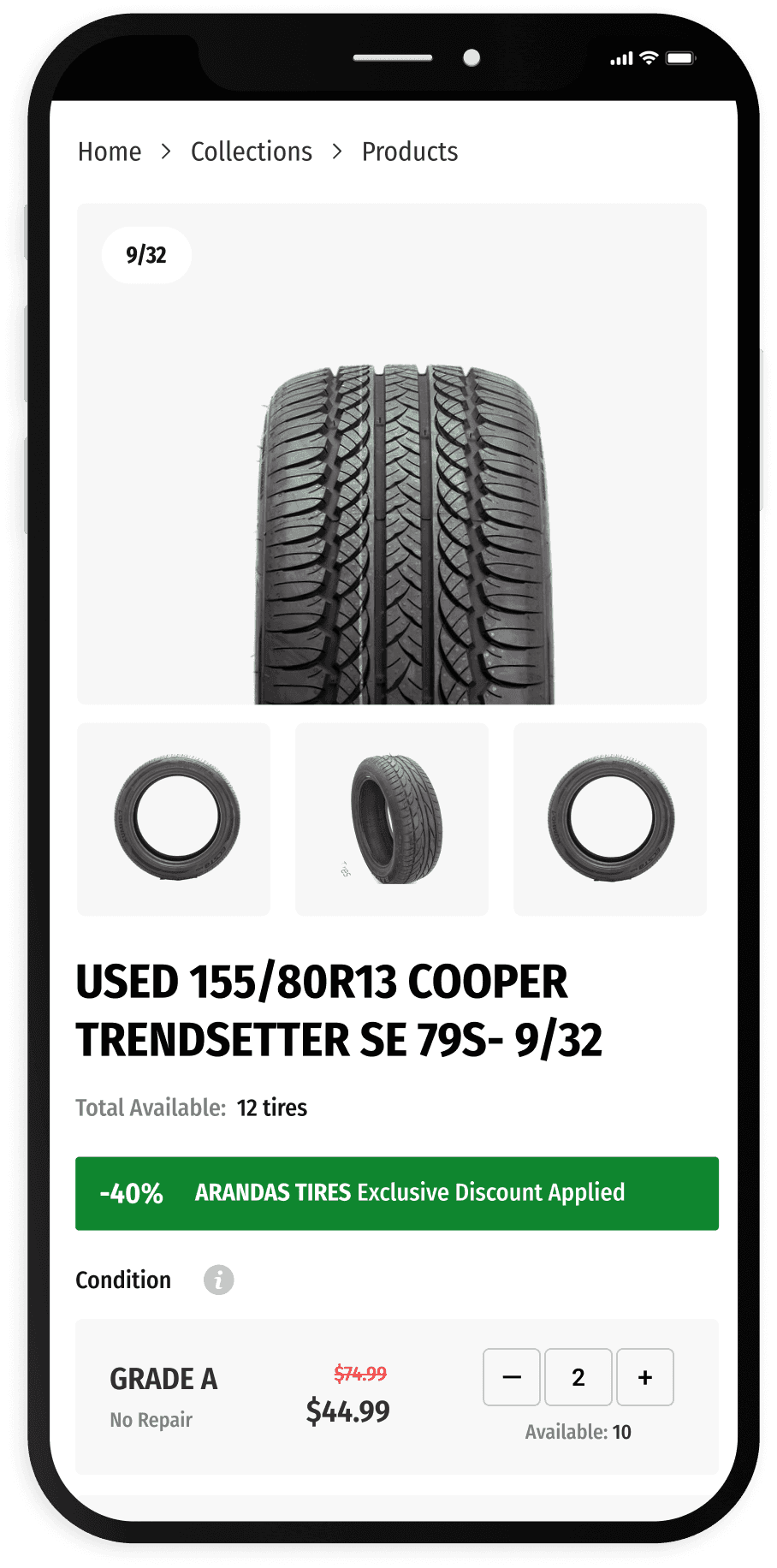
Mobile screens: search, multi-select filters, product list and product details.
Testing & Iteration
Testing with real dealers before writing any code
I tested interactive prototypes with 4 dealerships before handing anything to development. I picked a mix buyer profiles from the research phase so the feedback wouldn't skew toward one type of user.
What testing changed
My first designs showed the standard wholesale price for everyone. But dealers who'd negotiated their own rates were confused when the numbers didn't match what they were used to paying. So I added a "Your Discount" label that showed their specific negotiated rate with a discount badge next to it. Once they saw the portal recognized their account and pricing, their trust in the whole system went up.
Two of the four test dealers paused at the checkout step. They were worried about what would happen if the tires showed up and weren't what they expected. I added a free returns policy mentions on multiple steps throughout the ordering process (home, product page, checkout) instead of burying it in terms and conditions. That was enough to get them past the hesitation.
RESULTS
What happened after launch
100+
Within 6 months of the portal launching, 100+ partners were using it to browse and order. It became the primary onboarding tool for new business relationships.
24/7
Partners could check stock and pricing on their own schedule, including while their own customers were present, instead of waiting hours for a callback.
0
The partner network grew to 100+ businesses without adding headcount. Self-serve ordering absorbed the volume that previously required a dedicated person.
12
On-site research at partner locations that directly shaped the design decisions.
Reflection
What I took away from this project
The biggest thing I learned is that B2B product design isn't just B2C with bigger order sizes. The dealers I was designing for had years-long relationships with competing suppliers. They knew their rep's name, they had their phone number, they trusted them because they'd done business together for a long time. Asking them to switch to a screen meant I had to figure out how to make that interface earn the same kind of trust. That's a fundamentally different design problem than optimizing a checkout funnel.
Going to the dealerships in person changed my understanding of the problem completely. I would not have arrived at the "offline confidence" principle from a whiteboard session or a Zoom call. It came from watching a dealer flip through a handwritten supplier list and hearing him explain why he doesn't order online anymore. That kind of context doesn't come through a survey.
What I'd do differently
Build reordering into V1. Most tire shops order the same sizes on a regular cycle, roughly every few weeks. A "Reorder The Purchase" button would have saved them from repeating the same search every time. I pushed it to the backlog because I was focused on getting the core browse-and-buy flow right first, but looking back, that repeat purchase flow is probably where the real long-term retention comes from.
Add more human touchpoints. The portal did a good job replacing the transactional side of the phone call, but it didn't replace the relationship side. Dealers liked knowing they had a specific person they could reach. Adding details like showing their rep's name and photo somewhere in the interface, would have kept that personal connection alive alongside the self-serve experience.
Test with real inventory earlier. I built the prototype using sample data, and the sample data was clean. Real inventory isn't. After launch, we ran into edge cases I hadn't accounted for: a listing marked as a set of four when only three were actually in stock, discontinued sizes still appearing in search results, damaged tires with no clear way to flag them differently. If I'd pulled real inventory data into the prototype earlier in the process, I would have caught those problems before dealers did.
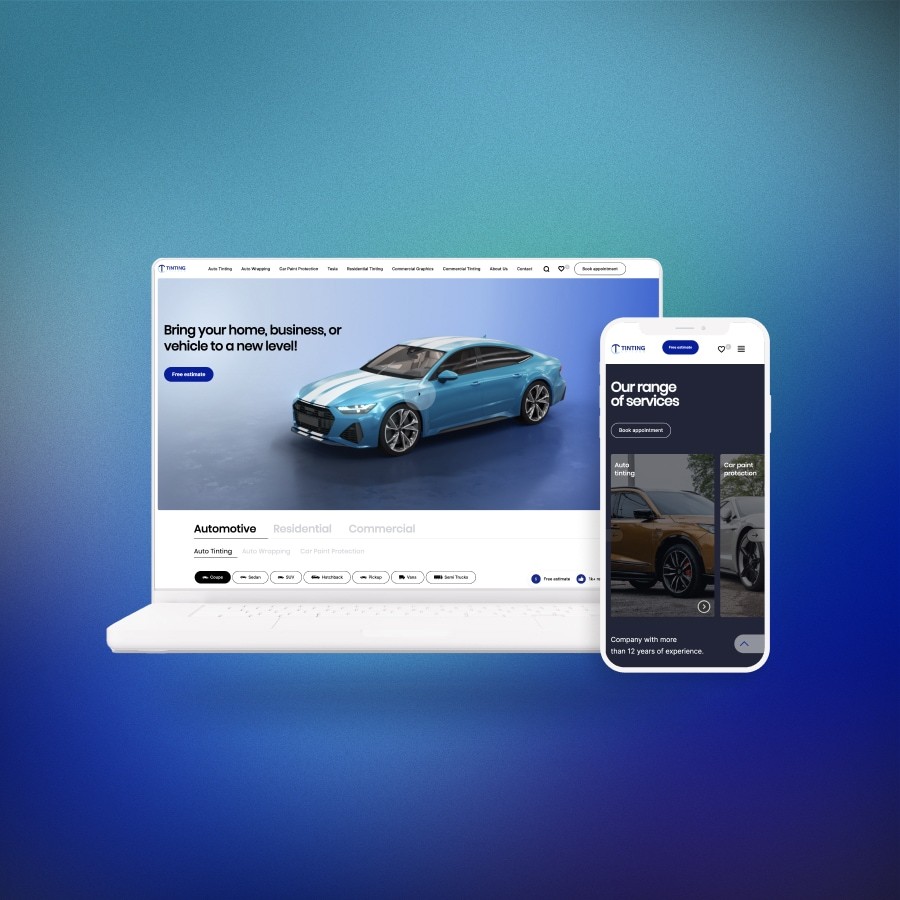
B2C
UX/UI Design
Creative Direction
Strategy
Turned a high-ranking site into a high-converting one. Rebuilt the information architecture, redesigned user flows, and directed all new visuals. Increased conversion by 54%, cut bounce rate by 31%, and kept top Google rankings.
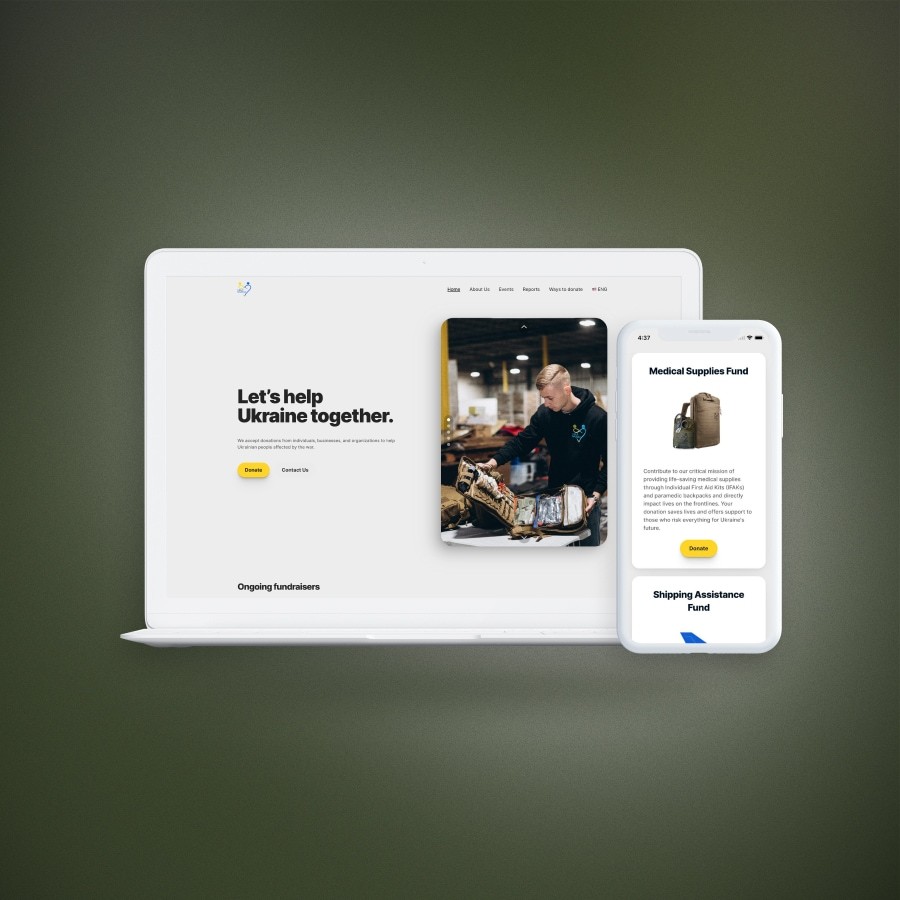
Product Design
Development
Nonprofit
Designed and built a donation platform in 4 weeks during active crisis response — $500K+ processed, 4-year donor retention.
